 Image 1 of 1
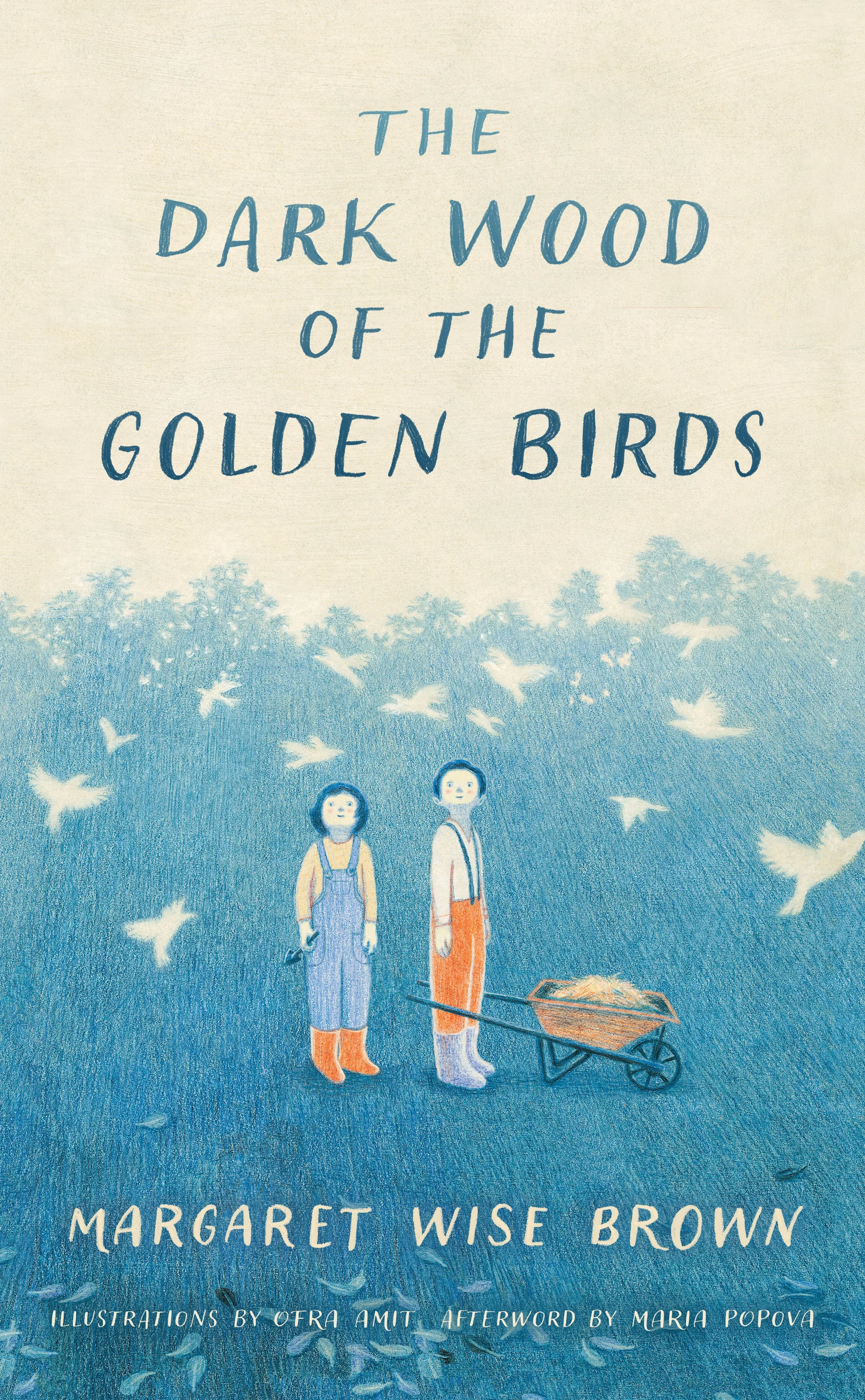
In 1948, a year after Margaret Wise Brown had enriched the world of children’s literature with Goodnight Moon, the love of her life fell gravely ill. Attending her partner’s bedside every day, she faced her inconsolable grief in the best way she knew: She wrote a love letter in the form of a children’s book. The Dark Wood of the Golden Birds brings us into a hushed and numinous world, illuminated by Brown’s signature poetic prose.
The story begins near the house of an old man who tends to honeybees and asparagus while living on the edge of a magic forest. Behind his home lies the dark wood—a place from which “there is no return”—where golden birds sing through the night and day. When two orphaned children wander onto his farm, he gives them a home and he warns them never to venture past the edge of the wood. When the old man falls ill, however, the boy decides to brave the unknown in search of a cure. What secret knowledge will he find in the dark wood?
With lush new illustrations by Ofra Amit and an afterword by Maria Popova, this rediscovered work of uncommon beauty and tenderness lights a path through love and loss for readers of all ages.
About Marginalian Editions
Marginalian Editions is a collaboration between Sarah McNally of McNally Jackson Books and writer Maria Popova, who selects and introduces forgotten masterworks that deserve a second life—uncommon books at the intersection of wonder and our search for meaning, from science and philosophy to poetry and children’s literature.


Praise for The Dark Wood of the Golden Birds
“In 1948, a year after she rewilded the landscape of literature with Goodnight Moon, Margaret Wise Brown watched the love of her life fade to black. Michael Strange, born Blanche Oelrichs, had cast an instant spell on Margaret—outspoken, sophisticated, and self-possessed . . . Both women were born in the wrong century, bent on bending it to their will; both were accidental radicals, just by living unselfconsciously . . . Margaret loved Michael with unassailable devotion, and Michael was dying. So she did the hardest thing in life—facing the death of a beloved while remaining a pillar for their passage—the best way she knew how: She wrote a love letter in the form of a children’s book . . . I fell instantly under the spell of this crepuscular story aglow with love and longing . . . Margaret's love letter to the mystery of death . . . bittersweet and beautiful like the transience of life itself.”
—Maria Popova, from the Afterword
Praise for Margaret Wise Brown
“Brown was a seductive iconoclast with a Katharine Hepburn mane and a compulsion for ignoring the rules . . . [Her books] were radical for their time . . . Brown helped create a new type of children’s literature that provided both aural and visual feasts. Her books . . . delighted, surprised, and sometimes disturbed.”
—Anna Holmes, The New Yorker
“Goodnight Moon, and indeed most of Brown’s exceptional and quirky bibliography, are that perfect marriage of mesmerizing for children and tantalizing for adults. They’re a pleasure to read—precise and rhythmic—words that don’t rhyme still harmonize so beautifully that even the most halting reader can become a poet, telling her child a blessing . . . Brown’s books are stories told through the eyes of children, with equal parts wonder and terror at the infinite world, and a brave yearning for independence.”
—Barrie Hardymon, NPR
“Brown was solely a writer, not an illustrator. She is known for the lyrical poetry of her texts . . . Goodnight Moon, with its simple, reassuring and cadenced text, elevated the craft of children's book writing to art.”
—Edith Kunhardt Davis, The New York Times Book Review
“Why has Margaret Wise Brown’s picture book Goodnight Moon sold upward of 48 million copies? . . . Like most of the hundreds of children’s books, poems, and songs Brown wrote during her short life, Goodnight Moon is less a story than an incantation. It summons a cocoon around reader and listener, a sensation of being pulled out of the hurly-burly of the world into a pocket of charmed tranquility . . . Her picture book texts—with their repetitions, impulsive digressions, and eccentric non sequiturs—always sound a bit like a story a child is making up as she goes along, or, rather, like the story that child would be trying to tell if she could only make the words come out right. Many great children’s authors replicate the tone of a beloved grown-up, but Brown, more than any other, speaks with the voice of a child.”
—Laura Miller, Slate
“Brown was anything but forgettable. She was gorgeous, vivacious and luminous, a firefly in Hepburn slacks. She had stormy relationships with both men and women. One of her favorite pastimes was beagling, a sport that requires chasing hares on foot. She was partial to furs; she preferred writing with quill pens; in her Greenwich Village apartment, she held festive parties for the Birdbrain Club, her friends’ answer to the Algonquin Round Table.”
—Jennifer Senior, The New York Times
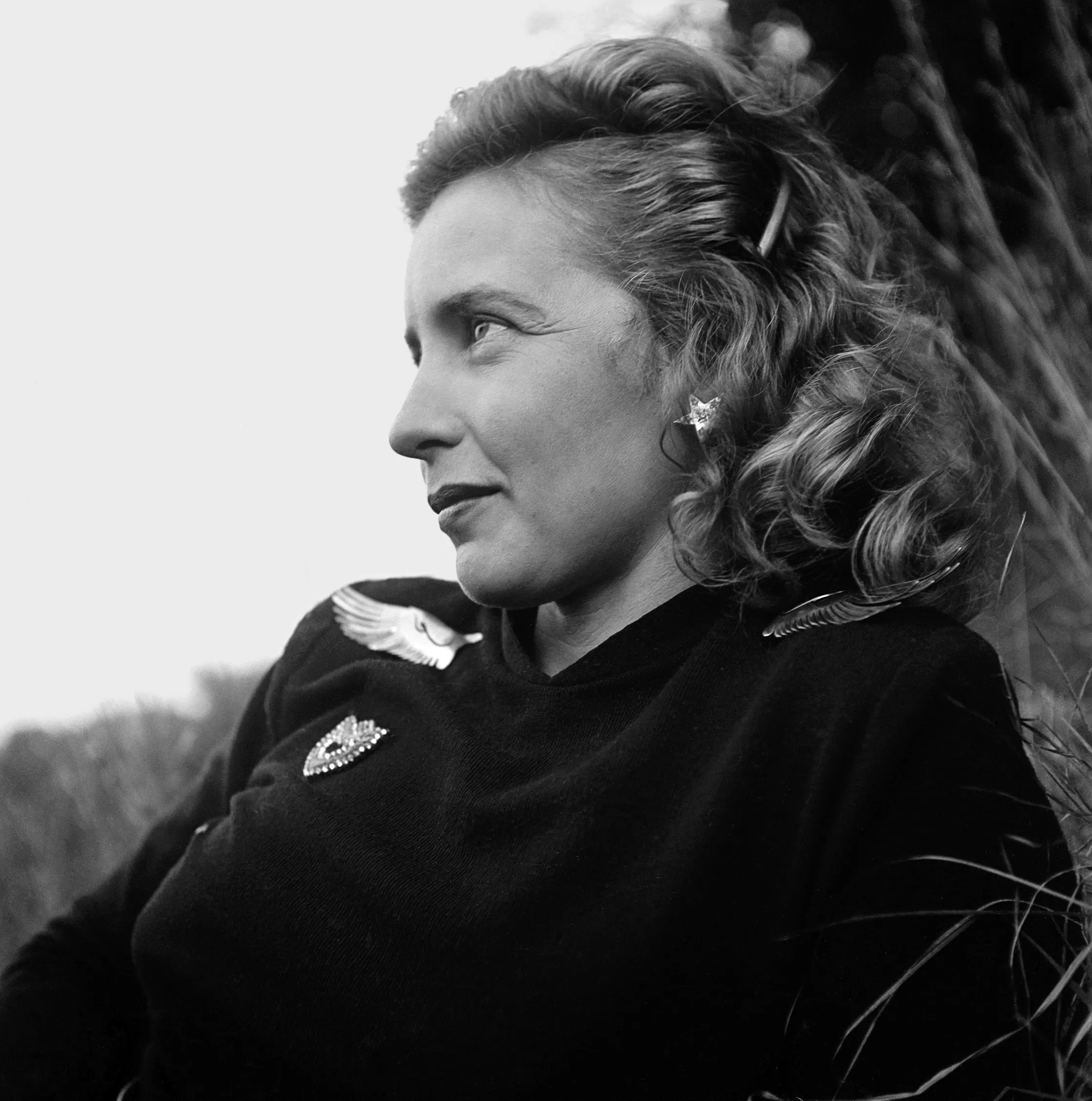
© Consuelo Kanaga
Margaret Wise Brown (1910–1952) was a prolific and beloved author of children’s literature, cherished for her unique ability to convey a child’s experience and perspective of the world. Best known for her classics such as Goodnight Moon and The Runaway Bunny, other perennial favorites by Brown include My World; Christmas in the Barn; The Dead Bird; North, South, East, West; and Good Day, Good Night.
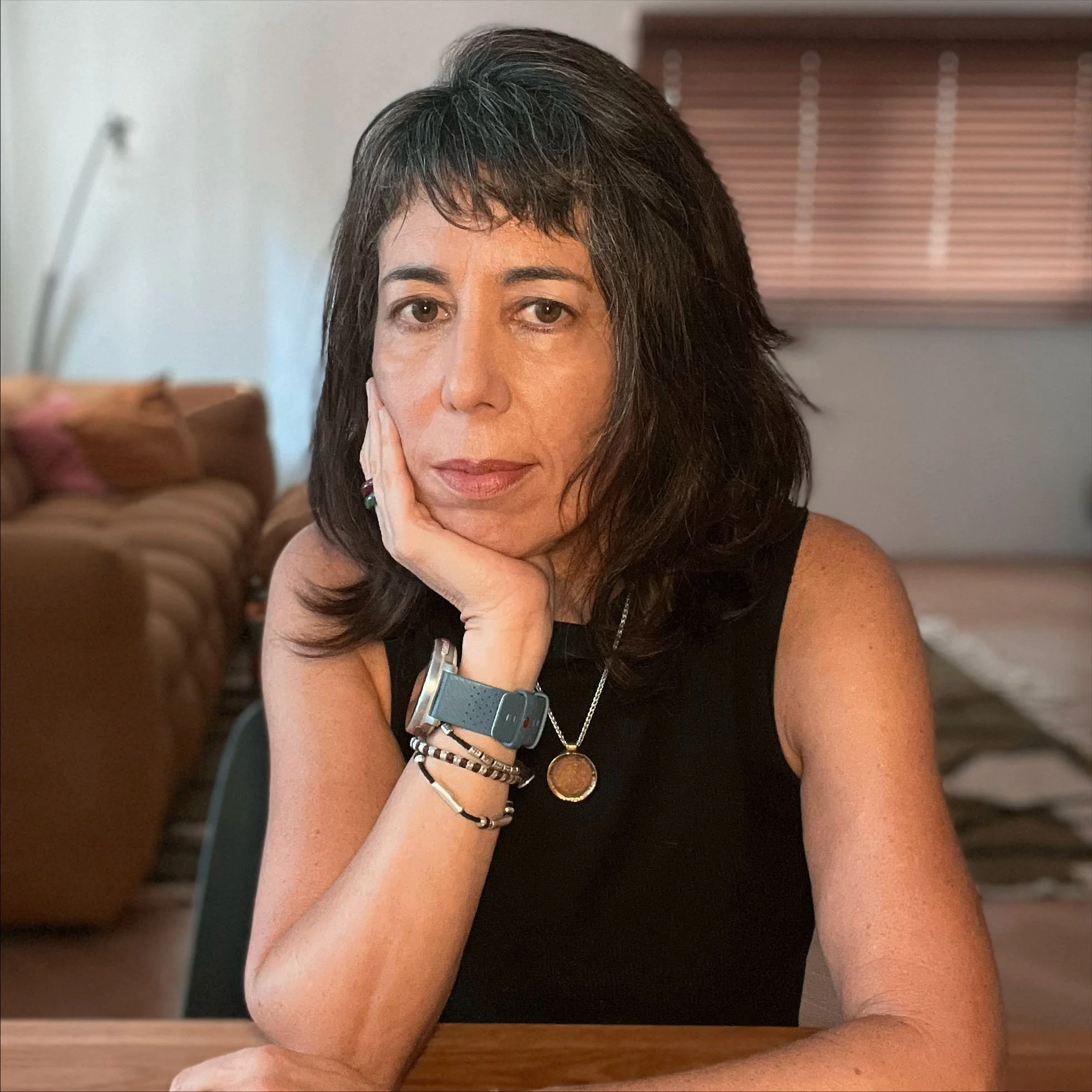
Ofra Amit is an award-winning illustrator based in Tel Aviv. Exploring the symbiosis between image and text, she creates visual narratives inspired by life events, both fictional and non-fictional, developed independently or in close collaboration with writers, editors, and cultural partners. Her work spans illustrated books, posters, and large scale murals, and is shaped by a narrative driven approach with close attention to visual pacing and atmosphere. Amit works primarily with acrylic, graphite, and colored pencils on paper and wood, valuing material presence as an integral part of storytelling. Her work has been recognized internationally, earning awards including three Gold Medals from 3x3 Magazine, a Gold and a Silver Medal from the Society of Illustrators, and the Alternative Publishing Category Award from the Association of Illustrators World Illustration Awards (WIA).

© Allan Amato
Maria Popova thinks and writes about our search for meaning—sometimes through science and philosophy, sometimes through poetry and children’s books, always through the lens of wonder. She is the creator of The Marginalian (born in 2006 under the name Brain Pickings), which is included in the Library of Congress permanent digital archive of culturally valuable materials. She has written some very long books (Figuring and Traversal) and some very short books (The Snail with the Right Heart and The Coziest Place on the Moon), and her show The Universe in Verse—a charitable celebration of the wonder of reality through stories of science winged with poetry—has also become a book the length of a day on Saturn.
The Dark Wood of the Golden Birds • ISBN: 9781961341630
Pub: Oct 20, 2026 • $24.00 • Marginalian Editions
Hardcover • 6.8" × 11.25" • 64 pages • full-color illustrations
Children's picture book—Ages 5–10 / death and mourning
Rights: World English, Audio
UK Pub: Nov 19, 2026 • UK Price: £16.99
Diane Ackerman
Foreword by Maria Popova
“Stunning . . . it is spectacularly good poetry, clear, lyrical and soaring . . . One of the triumphs of Ackerman’s pastoral is the demonstration of how closely compatible planetary exploration and poetry, science and art really are.” —Carl Sagan, The New Republic
From Marginalian Editions comes a gorgeous reissue of celebrated poet and naturalist Diane Ackerman’s debut: a soaring ode to our solar system, planet to planet, blending science and imagination, astronomy and cosmology, as well as fantasy, satire, myth, and reflection.