Image 1 of 1
First published in 1961, The Way to Colonos recasts three seminal plays by Sophocles into tales of modern women and warfare, probing their characters with savage intimacy. Antigone—a stylish woman in her thirties—wheeling her father, Oedipus, onto the ferry to Colonos, is disgusted by his self-absorption, guilt, and evasions. A suburban Electra dreams of a bloody confrontation with her mother, Clytemnestra, that may never come to pass. Philoctetes, a castaway soldier, navigates shifting allegiances in a guerrilla war that divided Greece after World War II.
As Rachel Cusk writes in her foreword to this new edition, Cicellis was a woman before her time, whose work—written in English, her second language—offers particularly “shocking insight into the secret lives of young women” and is only now “free to reach readers with an appetite for female artistic authority, who wish to see the world through sharp fresh eyes.”
“A woman before her time in her scrutiny of intimate relationships and her effortless shrugging off [of] conventions . . . She is a writer who has lacked a category, and it is to be hoped that her writing will now find itself beyond categorization, free to reach readers with an appetite for female artistic authority who wish to see the world through sharp, fresh eyes.”
—Rachel Cusk, from the Foreword
“Who but a Greek has a better right to raid Greek tragedy? Kay Cicellis, a Greek who writes the kind of English most English writers might envy . . . proves brilliantly that heart and character can still forge chains as shackling as those of 23 centuries ago . . . Cicellis has chosen to contract her drama to excellent effect [with] largeness of heart and a glowing style. If her people are the losers of the world, they are dressed in a human dignity of her making.”
—TIME
“The Way to Colonos . . . ruthlessly dramatizes the limits of individual freedom and the agony of facing one’s powerlessness. The book has recently been reissued at what feels like a propitious moment, when modern treatments of Greek myth proliferate, many of them adapting stories about destiny and order for a chaotic and individualistic time . . . Tragedy, in The Way to Colonos, emerges from its protagonists’ obliterating desire to follow the story that is most legible to them, in which they are most legible to themselves . . . In a modern world where free will is taken as a given, fate might be best understood as the tangle of powers that facilitate or obstruct individual wills. Perhaps it is our intuitive recognition of this dynamic—one not between gods and mortals, but between the free and the vulnerable—that brings us back to this ancient folklore, century after century.”
—Rachel Vorona Cote, The Atlantic
“Kay Cicellis will go very far.”
—Vita Sackville-West
“Cicellis . . . looks at life steadily and as if for the first time, with profound watchfulness, as if nothing else mattered. That is her essential originality; she has her own vision of life . . . Cicellis takes life from many sides, and is always sensitively conscious of the quality of the situation she describes. She has a style which catches the intimate nature of things and never stops at the surface. She is a remarkable writer.”
—Edwin Muir, The Observer
“One of the most refreshing and exciting of the world’s younger women novelists.”
—Linda Brandi, The New York Times
“Cicellis [has a] luminous sensibility and genuine compassion . . . Her prose is as light-intoxicated as the air of her native Greece, but her vision of life has a dark, existential pathos.”
—TIME
“Cicellis writes of very modern things and people . . . but the excellence of her writing lies in the fact that it has a timeless quality, a continuity with antiquity, a colour and warmth that is Greek whatever the time.”
—Times Literary Supplement
“Cicellis . . . has a startling talent, and her fluent precision lends a kind of dignity to the characters she creates.”
—Marigold Johnson, Times Literary Supplement
“She is like Penelope at her web, shuttling the coloured threads to and fro, weaving into the pattern love and hate, laughter and death . . . infinitely subtle.”
—Peter Green, The Daily Telegraph
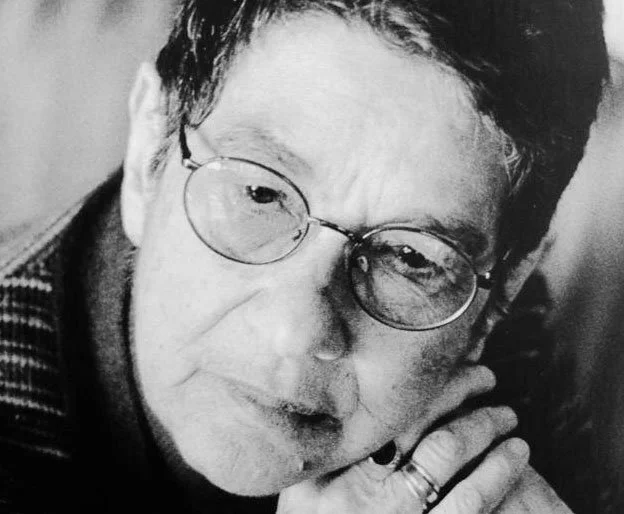
Kay Cicellis (1926-2001) was born to Greek parents in Marseilles, where she spent her first nine years. Having learned French and English in the nursery, she spent her later childhood in Athens and on her father’s native island of Cephalonia. Her first stories, smuggled out of Athens during the Nazi occupation, were published in the British military press when she was a teenager. Her first story collection, The Easy Way, appeared with an introduction by Vita Sackville-West in 1950. Cicellis also published a second collection, Death of a Town, and two novels, Ten Seconds from Now and No Name in the Street. She went on to become known as the preeminent Greek-English translator of her time, while working actively to oppose the right-wing dictatorship that ruled Greece from 1967 to 1974.

© Adrian Clarke
Rachel Cusk is the author of Second Place, the Outline trilogy, the memoirs A Life’s Work and Aftermath, and several other works of fiction and nonfiction. She is a Guggenheim Fellow. She lives in Paris.
The Way to Colonos: Sophocles Retold • ISBN: 9781946022776
Dec 2, 2025 • $19.00 • McNALLY EDITIONS no. 47
Paperback with flaps • 5” x 8.5” • 192 pages
eBook ISBN: 9781946022783
5” x 8.5” • 192 pages
UK Pub: Jan 15, 2026 • UK Price: £12.99