 Image 1 of 1
“I’ve got a job,” I told Adam.
“Good for you. I can now relinquish all responsibility for this household then?”
“And I can save up for a divorce.”
“So, let’s celebrate,” said Adam.
Discovered by three of Scotland’s most celebrated writers, Alasdair Gray, James Kelman, and Liz Lochhead, when they were visiting a local writers’ workshop in the late 1970s, Agnes Owens—then in her 50s—claimed she’d joined the group just to “get out of the house.” She had grown up in a working-class family outside Glasgow, done badly at school, and had worked in factories, as a cleaner, and as an occasional typist. When she published her highly acclaimed first novel at the age of 58, it launched a most unexpected literary career.
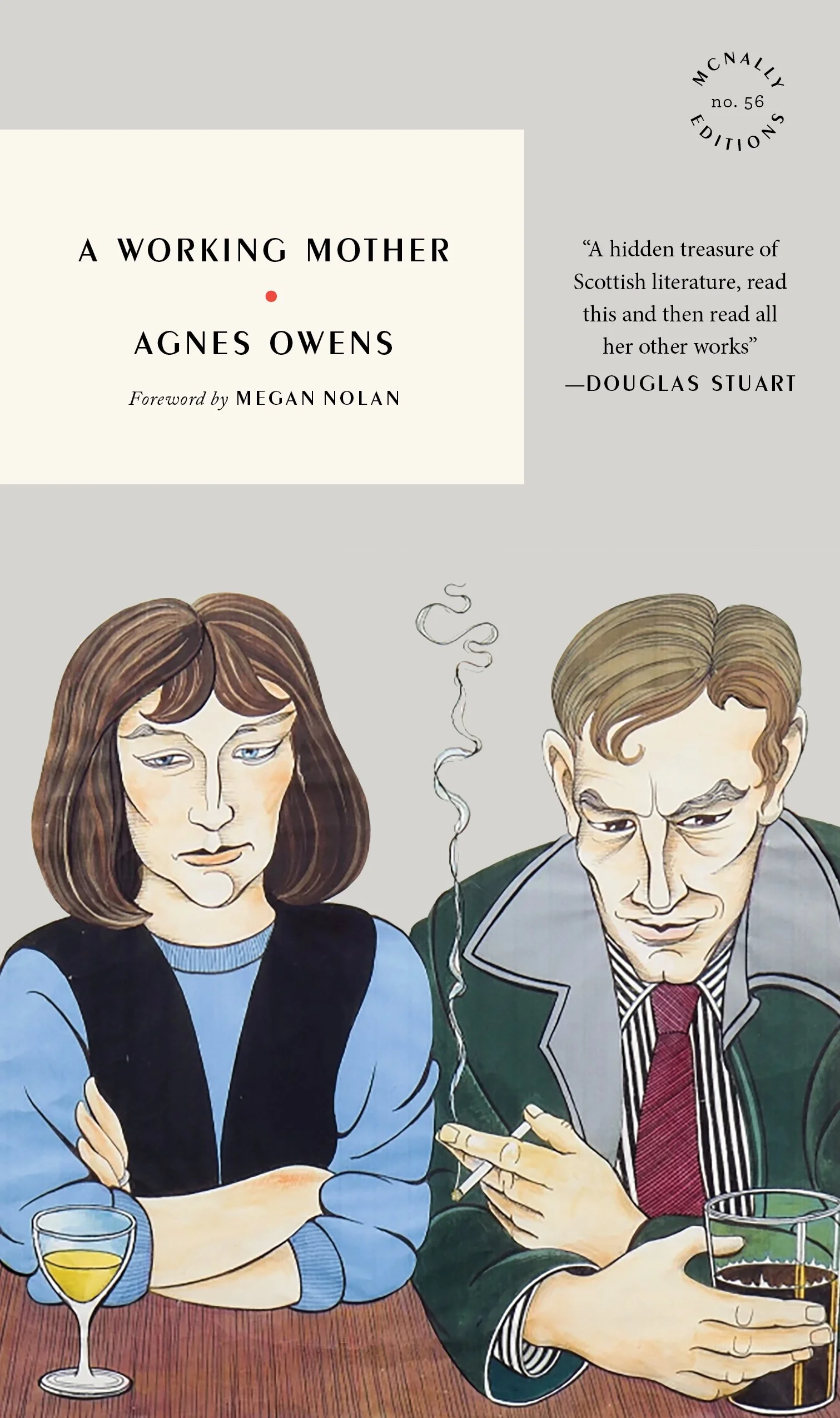
Nowhere is Owens’s black humor and attention to the surreal banalities and frustrations of ordinary existence better showcased than in her third novel, A Working Mother. Our beleaguered heroine is Betty, beset by her depressed, alcoholic war-vet husband Adam and their smart-mouthed kids. Neither an affair with Adam’s attractive friend Brendan (a disappointment), nor her new job as a typist (for a leerer with roving hands) can lift her out of the rut. Is it any wonder she’s taken to the bottle now too?
As Megan Nolan writes in the foreword to this new edition, in a “shrewd and ironic style” that is all Owens’s own, A Working Mother proves that “any given life rewards intelligent attention when it is as fine and as funny and incandescent as hers.”
“A hidden treasure of Scottish literature, read this and then read all her other works.”
—Douglas Stuart
“Agnes Owens’ hallmarks have been a frank irony, a deadpan gothic quality and a down-to-earth insistence on the surreality of most people’s normality.”
—Ali Smith
“The most unfairly neglected of all Scottish authors.”
—Alasdair Gray
“Owens pulls no punches. Her understated prose finds acerbic humour in the lives of characters hovering between farce and tragedy.”
—The Observer
“Owens is a gift to the Scots urban world.”
—The Sunday Times
“Her black humour and piercing observations bear comparison with the work of Muriel Spark.”
—The Guardian
“Owens has a voice no one could imitate, and humour to match . . . Scottish life as lived by those far from the comfort zone, depicted less with loathing than with love.”
—Rosemary Goring
“A sly, hilarious tale about one woman’s search for meaning . . . an engaging and very funny read.”
—Kirkus Reviews
“One of the most astounding documents of domestic life in Scotland.”
—The National
“A remarkable book, funny and sinister.”
—Beryl Bainbridge
“If literacy lasts [Owens’s novels] will be read a century hence when most longer books are forgotten.”
—Alasdair Gray
“A master of her craft.”
—Dani Garavelli, The Herald Scotland
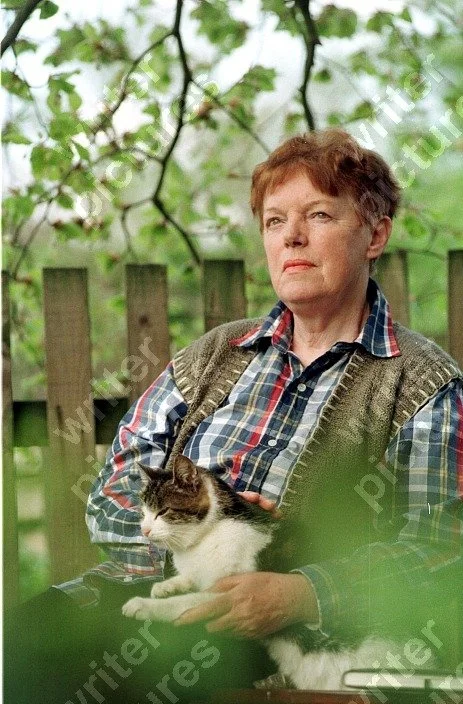
© Stephen Mansfield
Agnes Owens (1926–2014) married twice, brought up seven children and variously worked as a typist, cleaner, and factory worker. It wasn’t until she attended an evening creative writing course when she was in her fifties that she wrote her first novel, Gentlemen of the West, published in 1984 to widespread critical acclaim. She went on to publish a further five novellas as well as three short-story collections.

© Sophie Davidson
Megan Nolan is an Irish writer currently based in New York. For her debut novel, Acts of Desperation, Nolan was the recipient of a Betty Trask Award, shortlisted for the Sunday Times Young Writer of the Year Award and longlisted for the Dylan Thomas Prize. Her second, Ordinary Human Failings, was longlisted for the Women's Prize for Fiction, and shortlisted for the Nero Book Award for Fiction, Orwell Prize for Political Fiction, the Gordon Burn Prize and the RSL Encore Award.
A Working Mother • ISBN: 9781968671372
McNALLY EDITIONS no. 56 •
Pub: Oct 6, 2026
$18.00 • Paperback with flaps • 5.5” x 8.5” • 176 pages
Fiction—Domestic life / Black Humor / Satire
Rights: North America, Audio
eBook ISBN: 9781968671389